
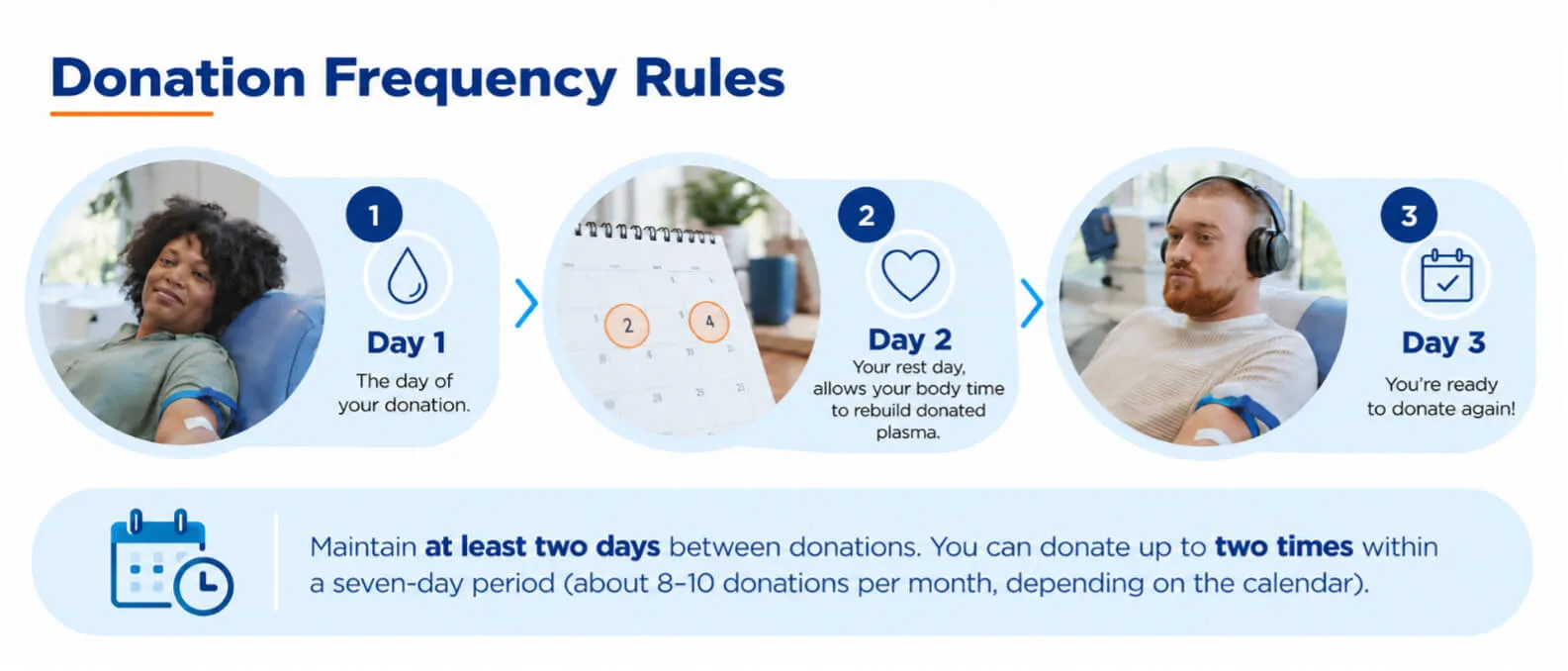
In the United States, eligible donors can donate plasma but not on back-to-back days. These guidelines are designed to give your body time to replenish the plasma proteins and fluids removed during the donation process.
Your eligibility is dependent on the U.S. Food and Drug Administration’s (FDA) regulations and your individual eligibility. Even if two days have passed, you cannot exceed two donations within any rolling seven-day period.
Why Are There Limits on Plasma Donation Frequency?
The FDA-established waiting period helps ensure continued donor safety while maintaining the quality of plasma used to manufacture life-saving therapies.
Plasma can be donated much more frequently than whole blood. That’s because plasma is mostly water, proteins, antibodies, and clotting factors that your body can replenish relatively quickly.
However, your body still needs time to:
- Restore plasma volume
- Rebuild important proteins
- Maintain healthy hydration levels
- Support your immune system
- Allow veins to recover between donations
How Long Between Plasma Donations?
You cannot donate on back-to-back days. This rule gives your body time to recover and helps maintain healthy protein levels. While plasma volume is often restored within about 24 hours, the additional recovery time provides an added margin of safety for donors.
How Often Can You Donate Plasma in a Month?
Because donors can donate up to twice every seven days, most people can donate approximately 8 to 10 times per month, depending on the calendar and scheduling.
For example, a donor following a Monday/Thursday schedule could potentially complete eight donations during a typical four-week month.
Keep in mind, eligibility requirements still apply at every visit. Hydration status, protein levels, overall health, and other screening factors can affect whether you’re eligible to donate on a given day.
Is It Safe to Donate Plasma Twice a Week?
Yes, for healthy individuals who meet all eligibility requirements, donating plasma twice per week is considered safe and falls within FDA guidelines. Plasma centers monitor donors closely through:
- Health screenings
- Protein level testing
- Vital sign checks
- Medical history reviews
That said, everyone’s body is different. Some donors prefer donating once per week, while others comfortably follow a twice-weekly schedule.
The best approach is to:
- Stay well hydrated
- Eat protein-rich meals
- Get adequate sleep
- Follow your center’s recommendations
- Listen to your body
If you ever feel unwell after donating, speak with the medical staff at your donation center as soon as possible.
When Might You Need to Wait Longer to Donate Plasma?
Although the standard waiting period is at least two days, there are situations where you may need additional time before donating again.
These may include:
- Illness or infection
- Recent surgery
- Certain medications
- Low protein levels
- Pregnancy
- Temporary medical deferrals
If you’re unsure whether you’re eligible, visit our Plasma Donation FAQs page, your donor portal, or speak with your local donation center for guidance.
Why Regular Plasma Donations Matter
Every plasma donation has the potential to help patients living with chronic and rare medical conditions while, at the same time, allowing you to earn extra money.
Ongoing donations from committed donors play a critical role in helping patients receive the treatments they need.
Learn more about the plasma donation process and what to expect as a donor on our Donation Experience page.
Final Thoughts
So, how often can you donate plasma? In most cases, eligible donors can donate up to twice every seven days, but not on back-to-back days. This plasma donation frequency allows donors to make a meaningful impact while giving their bodies time to recover.
Whether you’re a first-time donor or a regular visitor, maintaining healthy habits, staying hydrated, and following eligibility guidelines can help make every donation a successful one.
Ready to get started? Find an Octapharma Plasma donation center near you and discover how your donation can help save and change lives!