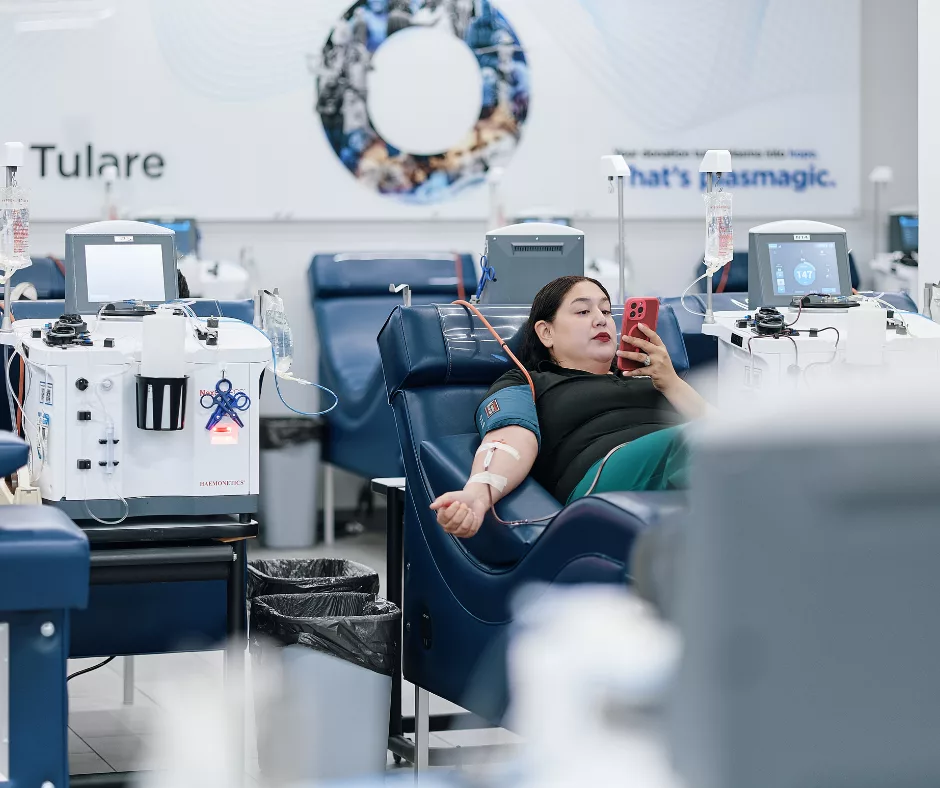



Plasma is the liquid portion of your blood, rich in proteins and antibodies. Every plasma donation is a gift of life. It’s a simple act that has a profound impact, providing essential materials for life-changing medicines. These therapies treat a wide range of rare and chronic conditions, offering hope and health to people around the world. Your decision to donate plasma helps create these vital treatments, supporting patients who rely on them every single day.
Conditions Treated with Plasma-Derived Therapies
- Hemophilia – A rare genetic disorder that prevents blood from clotting properly.
- Von Willebrand Disease (VWD) – An inherited bleeding disorder caused by a deficiency or defect in von Willebrand factor.
- Primary Immunodeficiency (PI) – A group of over 350 genetic disorders that weaken the immune system, making patients highly vulnerable to infections.
- Chronic Inflammatory Demyelinating Polyneuropathy (CIDP) – A rare autoimmune disorder that attacks the peripheral nervous system, causing weakness and loss of sensation.
How Plasma Becomes Medicine
Through a process called fractionation, donated plasma is separated into its various components. These components are then purified and concentrated to create specialized medical treatments. These therapies are used to manage more than 300 different conditions, many of which have no other form of treatment available.
For many patients, these plasma-derived medicines are not a temporary fix but a lifelong necessity.
Bleeding Disorders Treated with Plasma
Certain genetic conditions prevent blood from clotting properly, turning a minor injury into a life-threatening event. Plasma therapies provide the missing proteins these patients need to live safer, more normal lives.
Hemophilia
Hemophilia is a rare genetic disorder that prevents blood from clotting properly, causing prolonged bleeding even from minor injuries. While there is no cure, it is a manageable condition. Patients with hemophilia rely on regular infusions, often made from donated plasma, to prevent or stop bleeding episodes. These treatments are essential for their daily safety and well-being, allowing them to lead healthy, active lives.
- Who it affects: Hemophilia can affect anyone, regardless of age, race, or ethnicity.
- Annual Impact: It takes approximately 1,200 plasma donations to provide enough medicine for just one hemophilia patient for a single year.
Von Willebrand Disease
Von Willebrand Disease (VWD) is an inherited bleeding disorder that affects about 1 in 10,000 people. It is caused by a deficiency or defect in von Willebrand factor (vWF), a crucial protein that helps blood clot. While there is no cure, VWD can be managed with clotting medications made from donated plasma.
- Symptoms: Symptoms can range from mild, occasional bleeding to severe and prolonged bleeding from minor injuries.
- Treatment: Plasma-derived therapies are essential for managing bleeding episodes, especially during surgery or after an injury.
Immune System Conditions Treated with Plasma
When the body’s immune system doesn’t function correctly, it can lead to constant, severe infections or cause it to attack healthy tissues.
Primary Immunodeficiency (PI)
Patients with Primary Immunodeficiency (PI) have a weakened immune system, leaving them highly vulnerable to infections. PI refers to over 350 genetic disorders that impair the immune system, making it harder for the body to fight off illnesses.
Common signs of PI include frequent sinus infections, colds, ear infections, bronchitis, pneumonia, and fever. Without treatment, these infections can become chronic, cause organ damage, or even be life-threatening.
- Annual Impact: Approximately 130 plasma donations are required to treat one patient with PI for a year.
- Common Signs of PI: Frequent infections like sinus infections, colds, ear infections, bronchitis, pneumonia, and fever.
Chronic Inflammatory Demyelinating Polyneuropathy (CIDP)
Chronic Inflammatory Demyelinating Polyneuropathy (CIDP) is a rare, uncurable autoimmune disorder that attacks the peripheral nervous system, causing progressive weakness and loss of sensation. Without treatment, it can lead to permanent nerve damage and disability.
- Cause: The immune system attacks the protective covering of nerves.
- Treatment: Therapies made from donated plasma help reduce inflammation and manage symptoms.
Your Donation Makes a Difference
Hundreds or even thousands of donations are needed to support a single patient for just one year. Every time you donate, you become a part of someone’s life-sustaining treatment.
Donate today at a plasma center near you.